Monthly roundup culture consumed – January 2016

So, what did I do with January?

Books

Surprisingly not a lot of reading. The only two books I finished during the month were The Lies of Locke Lamora by Scott Lynch and The Bands of Mourning by Brandon Sanderson.

The Lies of Locke Lamora was a interesting read. The Locke Lamora of the title is a thief and leader of The Gentlemen Bastards, a thieving band that uses mummery and deception to make their scores. After some initial origin story (which remains interwoven through the rest of the book), what follows is a twisted tale of deception and betrayal, populated with an array of characters that range from anti-heroes to outright villains. I enjoy the grimdark style of story, especially in books like this that maintain a better gender balance. I enjoyed the book and will probably get the next in the series eventually.

The Bands of Mourning is the next in the second era Mistborn novels by Brandon Sanderson. Set in a world that has started to mix technology with magic, the story combines elements of the American wild west, an almost steampunk vibe and fantasy. These books are very popular, and extremely readable.

TV

I’ve started to watch The Shannara Chronicles, based on the books by Terry Brooks. The show has high production values and is beautifully shot, however I’m struggling with the acting, which is very wooden (including actors who I’ve seen give much better performances in other shows). I like fantasy enough that I’m giving this more of a chance, but it isn’t looking hopeful.

The sci fi series Killjoys has just started on Foxtel. Space based bounty hunters. I like the production values, but I’ve only seen the one episode so far so I’ll save commentary until a bit further in.

I started the second season of From Dusk Til Dawn, a horror series based loosely on the movie of the same name. I like what they’ve done to expand the world of the vampires, and seeing the guy that played the foreign exchange student in That 70s Show as a bad-arse vampire has a certain amount of comic value.

My 7 year old has started to watch Teen Titans, a cartoon about five superheroes (Robin, Starfire, Beast Boy, Raven and Cyborg). The story lines are pretty wacky, but in a sign of my enduring immaturity, I’m finding Teen Titans as funny as my daughter does. If you’ve got kids and you want them to like superheroes then I certainly recommend checking them out.

Regular readers of the blog will know that I’ve become somewhat addicted to superhero TV. DC’s Legends of Tomorrow is the latest in the TV that brought us Arrow and The Flash. I’ve only watched the first two episodes, and it is OK so far. However, I must concede that I’m struggling to see how the central conceit can last for the next few episodes, let alone more than one season. I guess I’ll have to watch along to find out.

The latest season of Grimm caught us a bit by surprise, so we missed the first few episodes. I really like Grimm, they have been doing a great job building the world season by season. One of my concerns at the start, around the dearth of strong female characters, has been slowly addressed and while it is not a perfect show on that score, it has significantly improved. If you haven’t watched it though, I recommend starting from the beginning – jumping in on season 5 would be a little disorienting.

Movies

None! A few coming up in February, but my movie watching in January was severely limited.

Coming Up

During February I’ll be continuing to watch the TV shows above and work out which of the new shows I’ll continue with. I’m also planning to watch the new Sherlock feature length The Abominable Bride. I’ve started reading the Isobelle Carmody series The Obernewtyn Chronicles. I’m looking forward to Zoolander 2 and Deadpool at the movies.

Razorhurst by Justine Larbalestier – a review

This review forms part of my contribution to the Australian Women Writers 2016 Reading Challenge. All my 2016 AWWC reviews can be found here.


Razorhurst

Razorhurst by Justine Larbalestier won the Aurealis Award for best horror novel in 2015 (I try to read the Aurealis and Ditmar award winning novels as a way of keeping in touch with the Australian SF scene).

I remain too lazy to recap storylines, so from the Goodreads blurb:

The setting: Razorhurst, 1932. The fragile peace between two competing mob bosses—Gloriana Nelson and Mr Davidson—is crumbling. Loyalties are shifting. Betrayals threaten.

Kelpie knows the dangers of the Sydney streets. Ghosts have kept her alive, steering her to food and safety, but they are also her torment.

Dymphna is Gloriana Nelson’s ‘best girl’, experienced in surviving the criminal world, but she doesn’t know what this day has in store for her.

When Dymphna meets Kelpie over the corpse of Jimmy Palmer, Dymphna’s latest boyfriend, she pronounces herself Kelpie’s new protector. But Dymphna’s life is in danger too, and she needs an ally. And while Jimmy’s ghost wants to help, the dead cannot protect the living . . .

One of the things that really struck me about Razorhurst was the authenticity of the writing. The novel is set in Sydney Australia in the 1930s, and the story has a verisimilitude that leaves the reader with the impression that Larbalestier undertook a hell of a lot of research.

Geographically the story is set very near to where I live, and it was amazing to peek into the world of Sydney just 80 odd years ago, and reflect on what an incredible century of progress there has been. The Sydney of the novel is a dark and gritty place, where the poor don’t stand much of a chance to make much of their life. I found it odd walking the streets of modern inner-Sydney and comparing it to the world of the book, seeing hipsters where there used to be beggars, and trendy cafes where there used to be slums.

The two point of view characters, Kelpie and Dymphna, start the novel seemingly worlds apart. Kelpie is a street urchin, slowly starving, stunted from malnutrition and barely getting by, plagued by the ghosts that haunt the streets. Dymphna is a beautiful young woman, one of the most sought after prostitutes in Sydney. The dynamic between the two creates the tension that drives the action. Without giving too much away, there were a few twists that highlight the differences and similarities between the two in startling and thought provoking ways. The choice of point of view characters and the time period allowed for some interesting exploration of issues of misogyny and empowerment.

The story rockets along at a good pace, with enough twists and turns to keep the reader very interested. The secondary characters are well fleshed out, and the dialogue sharp. The use of the supernatural elements of the story are kept on a short leash, and the story cleaves more towards historical fiction than speculative. This is not horror in the “bump in the night” style. The scary characters are not the ghosts, but rather the very-much-alive human beings that populate the seedy underbelly of Australia in the Great Depression.

Overall this is a highly readable historical fiction, with some subtle supernatural themes. Well worth checking out, especially if you are a resident of Sydney.

I also reviewed this book on Goodreads. View all my reviews.


Creative Commons License

This work by Mark Webb is licensed under a Creative Commons Attribution-ShareAlike 3.0 Australia License.

Dreamer’s Pool by Juliet Marillier – a review

This review forms part of my contribution to the Australian Women Writers 2016 Reading Challenge. All my 2016 AWWC reviews can be found here.


Dreamer's Pool

Dreamer’s Pool is the first book in the Blackthorn and Grim series by New Zealand born author Juliet Marillier. This was the first book by Marillier that I have read. I picked it up because it won the Aurealis Award for best fantasy novel in 2015 (I try to read the Aurealis and Ditmar award winning novels as a way of keeping in touch with the Australian SF scene).

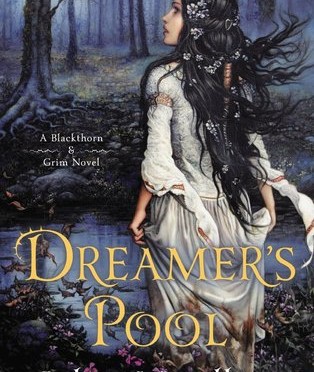
I must admit that I was a little put off by the cover, which conjured up images of a very romantic novel. And when read in the context of the cover, even the title of the novel seems a tad on the romantic side. While I have nothing against romance-heavy novels in the abstract, I must admit I find that I tend to procrastinate when faced with actually reading one. As a result, I put off starting Dreamer’s Pool for quite a few months.

Finally, I slapped myself in the face, gritted my teeth and sat down to read because it would be good for me. The novel-consuming version of eating my vegetables. My own writing has all the romance of a roadside diner on the Sydney to Canberra freeway (Australia’s most boring freeway), so I could stand a bit more exposure to good quality romantic writing. Besides, broadening my reading was part of the point of doing the AWWC, wasn’t it?

All that preparation. All that mental fortitude. All those good intentions. Wasted! Because Dreamer’s Pool isn’t a romantic novel at all. Well, I guess the story of the prince and his bride-to-be might be considered romantic. And I suppose the quest to resolve that situation is at the heart of the novel. And I guess it does turn around the triumph of true love over pragmatism. But I don’t care! Because the two main characters, Blackthorn and Grim, they are fantastic. No romance at all. Their story is one of two broken people and the power of friendship to kickstart a healing process.

I’m getting too lazy to recap storylines, so from the Goodreads blurb:

In exchange for help escaping her long and wrongful imprisonment, embittered magical healer Blackthorn has vowed to set aside her bid for vengeance against the man who destroyed all that she once held dear. Followed by a former prison mate, a silent hulk of a man named Grim, she travels north to Dalriada. There she’ll live on the fringe of a mysterious forest, duty bound for seven years to assist anyone who asks for her help.

Oran, crown prince of Dalriada, has waited anxiously for the arrival of his future bride, Lady Flidais. He knows her only from a portrait and sweetly poetic correspondence that have convinced him Flidais is his destined true love. But Oran discovers letters can lie. For although his intended exactly resembles her portrait, her brutality upon arrival proves she is nothing like the sensitive woman of the letters.

With the strategic marriage imminent, Oran sees no way out of his dilemma. Word has spread that Blackthorn possesses a remarkable gift for solving knotty problems, so the prince asks her for help. To save Oran from his treacherous nuptials, Blackthorn and Grim will need all their resources: courage, ingenuity, leaps of deduction, and more than a little magic.

The story is much darker than this blurb would have you believe. Blackthorn is an excellent character, whose perspective serves to leech away any chance of a sappy interpretation of people’s motivations. She is on a course of vengeance, held back only by the threat of destruction by the mysterious fey who released her. This motivation stains every human interaction she engages in.

Grim is devoted to Blackthorn, but broken himself. Marillier draws Grim as perhaps the most sympathetic of all the characters, but there is an undercurrent of violence that adds an edge to all his interactions as well.

Prince Oran, the third point of view character, is very much the embodiment of a modern 21st century perspective embedded in a medieval setting. He loves and listens to his people. He takes an enlightened perspective on things. He is an innovator. He is drawn somewhat sympathetically as well, and the resolution of his dilemma is the mystery that the story turns on.

The writing is excellent, very engaging and all the qualities of a real page turner. The plot is relatively straight forward, with the reader guessing many of the twists well in advance of the characters. Much of the tension comes from Blackthorn’s need for vengeance and how it clouds her perspective on the problem in front of her.

All in all an excellent read. This review isn’t really for the legions of devoted Marillier fans. I’m aiming this at you, yes you in the corner. The person who doesn’t like romance and who almost didn’t read even this review once you saw the image of the cover above. Do yourself a favour, and read this book. It’s not award winning for nothing!

I also reviewed this book on Goodreads. View all my reviews.


Creative Commons License

This work by Mark Webb is licensed under a Creative Commons Attribution-ShareAlike 3.0 Australia License.

Australian Women Writers’ Reading Challenge – 2016

Well, after good years in 2012, 13 and 14, my 2015 Australian Women Writers’ Reading Challenge was a bit of a disaster. I had my books selectedAustralian Women Writers' Challenge 2016, but only read 7 by Australian women writers in total, and of those only reviewed 4. This was in the context of a very bad reading year for me, especially in the second half. Still, I am disappointed in myself – I made a commitment and utterly failed to meet it.

So, I approach 2016 with a guilt-fuelled renewed sense of energy. I’ll be trying to read 10 books, and to review all 10. I will sound a note of caution though – the work and life pressures that took me away from reading last year are still in play.

If you haven’t done the AWWC before, I highly recommend it. It’s a great way to diversify your reading and get exposure to some wonderful new authors. And if you are looking for reading suggestions, the AWWC website has a great library of book reviews. My own reviews are here on this website, from 2012, 2013, 2014 and 2015. My 2016 reviews will be at this link throughout the year.

Monthly Roundup – August through December 2015

So, my monthly roundups haven’t been quite so monthly lately. I thought I’d get back into it with a quick canter through the latter part of 2015. This will, by necessity, not be comprehensive, however to give a sense of what I liked.

Books read

Aurora by Kim Stanley Robinson is a bit of a dissection of the generation ship trope in science fiction. It points out a flaw that I’ve often thought about in terms of terraforming other worlds (in fact, I touch on it in my flash fiction piece The Regersek Zone – see my bibliography if you’d like to have a read). Aurora is a bit hard going at times – it took me a few attempts to get into it. But well worth reading – I suspect it is going to be one of those books that define the 2015 reading year for science fiction.

A Knight of the Seven Kingdoms by George RR Martin is set in the world of the Song of Ice and Fire series, but is a prequel of sorts. It tells the story of the knight Ser Duncan (Dunk) and his squire Egg. It was very enjoyable, but I suspect you need to need to be a fan of Game of Thrones to get the most out of it.

Tower of Thorns by Juliet Marlier is another excellent book in her Blackthorn and Grim series. I’ll probably review it in totality for the Australian Women Writers’ reading challenge, but well worth a read if you like fantasy.

I’ll probably also review Zeroes by Scott Westerfield, Margo Managuan and Deborah Biancotti for the AWWC, but I’ll also encourage you to go out and buy the book now. Teenagers with super powers that walk a fine line between pathetic and awesome (a bit like the UK TV series Misfits if anyone saw that). I really enjoyed the book, looking forward to the rest of the series (for the writers in the audience, a great example of seamless writing from multiple authors).

Blonde Bombshell and Life, Liberty and the Pursuit of Sausages, both by UK writer Tom Holt, were both fun reads. Holt has a very amusing turn of phrase, and I enjoyed the books immensely as a result. They are not what I’d call page turners though – I took a break from both books for a few weeks without feeling compelled to return to the storyline.

Star Wars: Aftermath by Chuck Wendig was my pre-seeing-The-Force-Awakens reading. None of the main characters from the movie franchise, but a very enjoyable read, especially to be introduced to the murderous and mostly unhinged robot Mr Bones. I quite enjoy Wendig’s blog posts on writing – he makes the case for the hybrid writer (sometimes published mainstream, sometimes indie) quite convincingly. I especially liked his reaction to be asked to write a Star Wars novel, which was to basically geek out about it. The novel is set between the sixth and seventh movies, and was quite enjoyable.

Ancillary Mercy by Ann Leckie rounded out the Ancillary series. A great space opera covering issues of gender, colonialism, empire and identity. It was not as affecting as the first book (Ancillary Justice), however a solid end to a very enjoyable series. If you haven’t read any, start at the beginning.

The Aeronaut’s Windlass by Jim Butcher is the first book in a new series (The Cinder Spires series). This is very commercial fiction, page turning and a rollocking storyline. I really enjoyed it. The setting (Aether-punk?) had a fresh feeling, and there were relatable characters and a sense of a wider, more complex world that I’m sure will be explored in future books. I’ll be sticking with it.

Speaking of commercial fiction, its current king, Brandon Sanderson, released a new book in his Mistborn series, Shadows of Self. I’ve liked these last couple of forays into the Mistborn world. The sense of a secondary world fantasy “moving on” and developing technology is interesting, and not enough people bring in the tropes of a Western into their fantasy. Sanderson doesn’t need my signal boosting, but for what its worth it is a good read. If you haven’t read any of the Mistborn books, it might be worth going back to the beginning (although you could probably read this one on its own).

The Water Knife by Paolo Bacigalupi is a near future thriller about water shortages in southern America. The water knifes of the title are sought of secret agents tasked with either protecting or stealing water supplies for various states. A fascinating extrapolation on how environmental changes might impact the political landscape, as well as having fast paced action.

Razorhurst by Justine Larbalestier was the winner of Best Horror novel in the Aurealis Awards last year. Not normally my cup of tea, but the setting (based as it is very near my current living arrangements) and some damn fine writing made me glad the Aurealis judges pointed me in its direction. I’ll be writing a fuller review soon, but another book it is worth going out and grabbing.

Television

The Daredevil and Jessica Jones Netflix original series were probably the highlight of the last six months. I loved both series, grittier and darker as they were. Daredevil probably edged out Jessica Jones for me because of a stronger vein of dark humour that ran through it, but it was close run. If you like superhero TV these are both well worth watching, but don’t let your kids anywhere near them!

But on the subject of superhero TV you can let your kids near, The Flash and Supergirl are going strong. Both series seem pretty light weight after you’ve watched the Marvel Netflix original series, but it is still entertaining popcorn. Arrow is probably my favourite series in this linked up DC universe, but again I wouldn’t let my kids get close to it either.

Marvel’s Agents of SHIELD has been good as well. Too much superhero TV!

It is not really speculative fiction, but I’ve also inhaled the cop-comedy Brooklyn Nine-Nine recently. Laugh out loud funny.

Movies

Well, Star Wars: The Force Awakens of course. It flew by in a wave of nostalgia and action (lots of action – the action virtually never stops). I do have some thoughts, but I think I’ll hold back – it is still relatively early days and I appreciated people’s restraint in the few weeks it took me to see the film. I am thinking about going to see it again.

Spectre, the latest James Bond, was good but I must admit I kept waiting for a final twist that never really came. Still, everything you want in a James Bond film. Well worth seeing if you like the action/adventure space.

I also saw Mad Max: Fury Road which I really enjoyed. I can see the feminist angles to the movie which really added to the story. The special effects were great and the action unrelenting.

All the other movies I saw this year were aimed at my 7 year old, so I might not list them out.

Awards

Also, Ditmar nominations are open. For any overseas readers, the Ditmars are Australia’s speculative fiction awards that are via popular vote. Details are below – I’d like to encourage any eligible readers to get in and nominate some Australian work that they loved last year!

Ditmar Nominations Open

Nominations for the 2016 Australian SF (“Ditmar”) awards are now open and will remain open until one minute before midnight Brisbane time on Sunday, 31st of January, 2016 (ie. 11.59pm, GMT+10). Postal nominations must be postmarked no later than Friday, 29th of January, 2016.

The current rules, including Award categories can be found at:

http://wiki.sf.org.au/Ditmar_rules

You must include your name with any nomination. Nominations will be accepted only from natural persons active in fandom, or from full or supporting members of Contact 2016, the 2016 Australian National SF Convention. Where a nominator may not be known to the Ditmar subcommittee, the nominator should provide the name of someone known to the subcommittee who can vouch for the nominator’s eligibility. Convention attendance or membership of an SF club are among the criteria which qualify a person as “active in fandom”, but are not the only qualifying criteria. If in doubt, nominate and mention your qualifying criteria. If you received this email directly, you almost certainly qualify.

You may nominate as many times in as many Award categories as you like,although you may only nominate a particular person, work or achievementonce. The Ditmar subcommittee, which is organised under the auspices theStanding Committee of the Natcon Business Meeting, will rule on situations where eligibility is unclear. A partial and unofficial eligibility list, to which everyone is encouraged to add, can be found here:

http://wiki.sf.org.au/2016_Ditmar_eligibility_list

While online nominations are preferred, nominations can be made in anumber of ways:

1. online, via this form:

2. via email to ditmars@sf.org.au; or

3. by post to:

Ditmars 6 Florence Road NEDLANDS WA 6009 AUSTRALIA

Conclusion

Phew – that’s covered a lot of ground. As you can see my reading slowed significantly in the second half of the year. Work and family took me away from reading very much. So, what have you been reading/watching lately?
GenreCon 2015

Late last year I attended GenreCon 2015, held this time in sunny Brisbane. Once again an excellent convention.

GenreCon is a convention for people in the writing game, rather than a fan convention. It focuses on all kinds of genre, but primarily crime, romance and speculative fiction, although I suspect any writer would get a lot out of the convention.

I certainly get a lot out of GenreCon. This is the third time I’ve been along, and each time I find it a recharging experience. It is great to hear from various interesting writers, editors and publishers, and get a sense of what is going on in the writing community more broadly. Because the focus of the convention is on the professional side of the business, it has a very different vibe to the various fan run speculative fiction conferences around the country. Obviously the sessions in the convention are all focused on different aspects of the writing craft, but this also impacts everything from the type of people who attend through to the conversations that go on in the breaks.

The administration of the convention is great. The registration process is smooth, and everything seemed to run seamlessly over the weekend. Being fully catered keeps everyone in the same place, which means you’re more likely to bump into people and have various discussions. The only small glitch for me this time was my own fault – I completely missed the email that came out asking people to register for some of the workshops. There were a couple I would have really liked to do (especially the workshop on editing/polishing your fiction by Angela Slatter), but by the time I arrived in Brisbane they were all booked out. So, tip for young players – always make sure you register for workshops well in advance!

I got a chance to catch up with quite a few people over the weekend, which was fantastic. Special shout out to Geneve, James and the gang, who entertained me through many breaks. Rivqa and the Sydney based crew were all doing some fantastic work – look forward to catching up more through the year. And there were quite a few speculative fiction authors who I’ve seen at other conventions (e.g. Tansy Rayner Roberts and Alan Baxter) who it was good to touch base with briefly. I always attend conventions thinking that I’m going to end up sitting in the corner by myself the whole time, and there always end up being so many interesting people to talk to!

I had one particularly interesting conversation with Carmen Jenner, a powerhouse indie author in the romance genre. Carmen had some fascinating insights into what makes indie authors successful, and I learnt a lot from our conversation. This illustrates to me the power of a convention that reaches to a broad range of genres – you can get a lot from the different perspectives out there.

All the sessions I attended had a lot of value, sometimes with specific advice, sometimes more general interest. I really enjoyed a plenary session that Kaaron Warren ran on some research she’d done as a part of a research fellowship she’d won in Canberra (intriguingly titled The Prime Minister and the Granny Killer).  The banquet was also a lot of fun, interesting conversation and Tansy Rayner Roberts did a great job interviewing the international guest of honour Mary Robinette Kowal (who even put on a puppet show)!

One observation was that in previous years there seemed to be greater representation from publishers, editors and agents on the various panels. This convention was much more focused on writers, and I missed the broader industry feel of the previous conventions.

So, an excellent conference all around. I returned to Sydney with a bit of a boost to my writing batteries. If you get a chance to attend any future GenreCons I highly recommend it – one of the best writing conferences in Australia.

Editors note 12/1/16: this article was supposed to publish on Sunday 10th January with the miracle of scheduling. The scheduling didn’t work! I promise to build in an appropriate checking process to the publishing schedule from now on.

2015 versus 2016

Well, 2015 certainly kicked my writing backside. I started off the year well, but a combination of work and family commitments conspired to drop my writing productivity to almost zero by the time we reached December.

This website was a victim of my malaise – I haven’t written an article for a few months now. It has been a combination of a lack of time and not feeling like I’ve had much to say. A poor excuse, granted.

On the writing front, I only published one short story in 2015, Authentic Empathy which was published in the special 200th edition of AntipodeanSF earlier in the year. It was a great privilege to be selected for the magazine (and if you’re interested in looking at the story, check out my bibliography). The rest of the year I spent skipping between a few longer works, including refining the draft of my urban science fantasy novel (Unaligned), and building out a fantasy long story into a novella length work. Both require a lot more work, but it was good to make some progress.

I also wrote the start of a science fiction novel (about 10,000 words) as well as a couple of chapters of a middle grade novel, as well as the opening scenes for the sequel to Unaligned. From this you can probably tell that I’ve spread myself a bit thin over too many projects, rather than finishing a smaller number. There is probably a lesson in that.

I also accumulated a backlog of reviews I haven’t written, especially for the Australian Women Writers’ Reading Challenge.  I reviewed 4 books (reviews can be found here) by Australian women authors and read another 3, but didn’t hit my goal of ten in total. This certainly reflected my much reduced reading for the year, but I’m disappointed nonetheless.

On the podcast front, I contributed exactly nothing to the GalacticChat podcast this year. Stupidly, I should have thought about setting up some interviews when I was at GenreCon in Brisbane – fellow podcaster Helen Stubbs and I both attended and there was such a wide variety of authors and other interesting industry types, good interviews couldn’t have helped but follow. Ah well, lesson learnt for next time.

So, what is in store for 2016? GenreCon in November and a few weeks off work over Christmas has renewed my appetite for writing, which has been great. I’ve been transcribing a lot of my longhand writing from the year onto the computer over the last few weeks which has been surprisingly validating (I wrote more words last year than I thought!). I’d like to get the first draft of Unaligned into fighting shape and finish off the fantasy novella. I seem to do better at writing first drafts than the editing process, so I will punctuate the editing with working on a couple of short story ideas (I think having some short stories published does help me keep a sense of momentum).

For this website, I’ve decided to work towards publishing one article each Sunday night, to create some sense of regularity. I will publish any news about publishing of my work separately, so the Sunday night article will be either a review, a general musing or something that has caught my attention. This probably means finding some kind of project to help create content – I’ll add that to my to-do list.

Hopefully this will also mean that my reviewing for the Australian Women Writers’ Reading Challenge will be a little more prompt!

I’ve been contributing to AntipodeanSF behind the scenes, producing the eBook versions of the magazines each month. I’ll continue doing that, and will look at how I might improve my contributions in the podcasting space, depending on what happens with Galactic Chat.

That should be enough to keep me going.

Given my long absence from this website, I doubt I have any readers left, but if there are any of you out there, what are your 2016 writing resolutions?

Peacemaker by Marianne de Pierres – a review

This review forms part of my contribution to the Australian Women Writers 2015 Reading Challenge. All my 2015 AWWC reviews can be found here.


Peacemaker

Peacemaker is the latest novel by Australian veteran author Marianne de Pierres, and was the winner of the 2014 Aurealis award for Best Science Fiction novel (the Aurealis awards are Australia’s premium judged awards for speculative fiction).

The book is set in future Australia, where urban sprawl has gone to an extreme. Ranger Virgin Jackson works in Birrimun Park, a sort of US Wild West style theme park, which also happens to be some of the only outback land still accessible to citizens. Jackson is self reliant and somewhat anti social. She seems to like her life, but it gets overturned when she comes across a murder in the Park. The rest of the novel follows her attempts to find out what is going on around her.

I liked the milieu and general world building of the book. There were intriguing glimpses into how Australia had evolved as a society over a longer period of time. The combination of the urban and the outback style settings made for an interesting contrast, and I was genuinely curious to find out more about how this society operated.

I was surprised that this won the science fiction category. While it is set in the future, the tropes and the style of writing seemed to lend themselves better to an urban fantasy categorisation. The supernatural elements are emphasised significantly more than the technology, and the protagonist’s disdain for modern society also takes away from any sort of futuristic feel.

I didn’t engage well with the main characters. I found Ranger Jackson a little irritating and the enigmatic US Marshall a little cliched. I did, however, enjoy the array of secondary characters. There was enough to flavour the world though, and highlight the different facets of the world de Pierres has created.

The writing was solid and well done – rich enough to draw you in but with an enviable economy. The pace was fast and the plot was interesting.

I did, however, find it hard to orient myself in the book. For instance, I walked away with the impression that the eastern seaboard was one big city, but I don’t think that could be right. We’d be talking over 2000km of city. That seems unlikely in the timeframe in question. I probably got that wrong. Issues like that kept dropping me out of the story though and I found it hard to completely immerse myself in the book.

Overall this was a solidly written and well put together book. Unfortunately, it didn’t 100% gel with me and I doubt I’ll be seeking out the sequels. However, this was mostly personal taste and I can recommend it for those that like the idea of urban fantasy in a more futuristic setting.

I also reviewed this book on Goodreads. View all my reviews.


Creative Commons License

This work by Mark Webb is licensed under a Creative Commons Attribution-ShareAlike 3.0 Australia License.

Monthly roundup – June and July 2015

So, my website has been neglected for the last couple of months – work has been a bit crazy and I’m running very behind on a whole lot of extra-curricular stuff.

So, let me catch you up gentle reader.

I’ve read a few books over the last couple of months, all of which I enjoyed. I finally read Dodger by Terry Pratchett. Set in the England of the industrial revolution, it follows the exploits of Dodger, a young man who scours the sewers of London for treasure that others have flushed away. I’ve been putting off reading this book, knowing that it was the last new pure Pratchett I’m every going to read. It was good, amusing all the way through and with the great turn of phrase I expect from a Pratchett novel. It was strange reading something that wasn’t set in Discworld, but it was a refreshing change (as much as I love Discworld novels!). Recommended if you’re a Pratchett fan.

I have been eagerly awaiting the release of The Big Smoke by Jason Nahrung. Nahrung is one of my favourite authors, and The Big Smoke didn’t disappoint. I’ll be writing a full review soon, but in the meantime if Aussie vampires in Brisvegas sounds intriguing, get out and buy the book (and Blood and Dust, the first book in the duology, which I reviewed here).

Moving more internationally, I inhaled The Goblin Emperor by Katherine Addison, which has featured on many of the speculative fiction award lists this year. An excellent novel, it follows a half-elf-half-orc who unexpectedly inherits the throne when his father and older half-brothers unexpectedly die in an accident. The main character is very sympathetic, and the writing very clean. A real page turner, I read the book in a couple of sittings. I can see why it has received so many accolades. One of the best fantasies of the year.

Peripheral by William Gibson was also very enjoyable, if not the same kind of page turner. Based on the premise that people in the future find a way to communicate with the past through a computer system, it is part science fiction, part murder mystery and part thriller. It took a little bit of effort to get into the book, but once there I really enjoyed it. Well written and the trademark Gibson  extrapolation of current technology gives much food for thought.

I decided to read the winners of each novel category of the 2015 Aurealis Awards to keep my eye on the Australian scene. I started with Peacemaker  by Marianne de Pierres, winner of the Best Science Fiction category. I’ll be doing a full review for the Australian Women Writers Reading Challenge, but in short it was a good novel solidly executed, but I don’t know that I’ll be rushing back for the second book in the series.

Next off the mark was The Dreaming Pool by Juliet Marillier. I really enjoyed this book. There was an element of “you can’t judge a book by its cover”, because I had completely the wrong idea about the book from the title and the cover. Once again, I’ll be writing a full review for the AWWC but well worth reading.

I’m taking a short break from my Aurealis reading to look at The Long Utopia by Stephen Baxter and Terry Pratchett (more Stephen Baxter than Terry Pratchett, mores the pity – nothing against Stephen Baxter, but I do miss Pratchett’s writing). About as expected so far.

TV wise, like everyone I watching through to the end of Game of Thrones season 5, and have spent the requisite amount of time worrying about Jon Snow’s fate. That’s probably enough – there have been a lot more written about GoT everyone else on the internet, and I find myself without anything interesting to say.

I started watching Dark Matter, which has the distinction of being a science fiction show actually set on a spaceship. I hadn’t realised I’d been missing that until I got about half way through the first episode and thought “<insert deity of choice>, I love spaceships”. A good premise (everyone waking up with amnesia) and very competently executed so far. I’m hooked.

I also started watching Defiance season 3. For a show that was released primarily to sell a computer game, I’ve found Defiance quite compelling. There has been a bit of a clear out of old characters, but I’m still liking the show. If you haven’t watched the first two seasons, I probably wouldn’t advise starting at season 3.

I started watching The Messengers but abandoned it after 1.5 episodes. I’m not a religious man, but I can be convinced to watch angel/demon shows (for instance Supernatural), but I’ve decided I only like them when the angels are almost as bad as the demons.

On the superhero side of things, Gotham has been getting better and better. It is dark – very gritty with characters having to make some nasty choices (one of them, for instance, had to scoop her own eyeball out. It made sense at the time). I’ve always liked the Batman tale, and this exploration of the pre-origin story has grabbed me more than I thought it would. Worth persevering with if you like Batman but didn’t like the first half of the season.

I also just finished Arrow season 3, which was about as I expected. I’ve heard a lot of commentary panning the flashback format of the show, but I really like it. I’m enjoying having Oliver Queen’s backstory filled in, and having the flashbacks track exactly 5 years behind the main action works for me.

Agents of SHIELD was competently executed, and lets face it, I’m just a huge fan of the Marvel Cinematic Universe. While I enjoyed watching it, I’m struggling to find anything interesting to say about it. So, lets just stick with “if you like the MCU, you’re probably watching AoS already” and leave it at that.

12 Monkeys was an interesting time hopping adventure. Based loosely around the Bruce Willis/Brad Pitt movie of the same name, it included an interesting take on time travel that remained mostly coherent. I remained interested enough to see it through to the end, just to see how everything played out. I liked the end, pointing everything at “you can’t escape destiny”, then pulling a fast one in the last scene. I’ll be keeping an eye out for the second season.

Wayward Pines started off in an intriguing way. A ten episode season, I was surprised when they revealed the mystery at the heart of the story about half way through. It changed the nature of the narrative quite dramatically. I didn’t mind not having Lost levels of irritating and contrived mystery, but it has made me wonder where the show could possibly go from here. I may start the next season, but I make no guarantees about finishing it.

In the last couple of weeks I’ve started in on the new seasons of Teen Wolf and Falling Skies. More on them next month.

I even got out to see a couple of movies. Imagine what you think the Entourage movie will be like. Picture it in your mind. You’ll be pleased to know that it is exactly what is hovering in your pre-frontal cortex. If you liked the series, then it is a bit of nostalgia. If not, don’t bother.

I really enjoyed Ant Man. It was significantly funnier that I was expecting, and after the ever escalating plots of the last few MCU movies, it was nice to have something with a manageable scale. A good stand alone movie as well if you haven’t kept up with the franchise.

And finally I popped out to see Mission Impossible this weekend. Pretty good non-stop explosions and Tom Cruise may be a fruit loop, but he is an incredibly fit fruit loop. Either special effects are getting really good, or Mr Cruise does a LOT of his own stunts. Lets face it, we all know that we’re going to wake up one day to the headline “Tom Cruise Dies Performing Bloody Stupid Stunt”. Still, in the meantime it makes for some spectacular, if mindless, entertainment.


The Dagger’s Path by Glenda Larke – a review

This review forms part of my contribution to the Australian Women Writers 2015 Reading Challenge. All my 2015 AWWC reviews can be found here.


The Dagger's Path

The Dagger’s Path by Glenda Larke is the second in her The Forsaken Lands series. I reviewed the award winning first volume The Lascar’s Dagger earlier in the year.

The Dagger’s Path continues on pretty much straight after the end of the events of the first book. Without giving too much away for fear of spoiling the first book, the primary thread is about the main characters attempting to return something to the Va Forsaken hemisphere, which is an archipelago in warm climes. We also find out a lot more about the plotting in the Va-loved hemisphere.

Most of my general comments about the setting of the first book apply here too. The spice trade with sailing ships in tropical islands is a different setting from many other fantasy series, and remained fresh throughout this second book.

This is not a stand alone book, and I would imagine it wouldn’t make much sense if you haven’t read the first one. Like many second books in trilogies, it also serves to set up some big confrontations for the third book.

But despite that, the book moves smoothly. Tension is executed well, the book has its own incidents to deal with and there is more than enough action to go around. The characters evolve over the course of the book, although I still struggle to reconcile the behaviour of the main character (Saker) with the description he was given when he was first introduced. However, his competency develops through this book and the original introduction of the character was long enough ago that I wasn’t as bothered by it this time around.

The scene is being set for a good conclusion, which I guess is most of the job of a second book. Looking forward to reading the next book in the series when it is released.

Recommended.

I also reviewed this book on Goodreads. View all my reviews.


Creative Commons License

This work by Mark Webb is licensed under a Creative Commons Attribution-ShareAlike 3.0 Australia License.