The Corpse-Rat King by Lee Battersby – review

The Corpse-Rat King

The Corpse-Rat King is Lee Battersby‘s first novel. Battersby has a fine pedigree as a short fiction writer and while I haven’t read as much of his stuff as I’d like, he comes very highly recommended by people whose taste I trust. The Corpse-Rat King was nominated this year for the Australian Shadows Awards (Best Novel) and the Ditmars (Best Novel).

And very well deserved those nominations were too.

First up I have to say that I found the characters very engaging. I particularly loved the character of Marius, who made for an excellent bounder, cad and reluctant anti-hero. While most of the rest of the cast had relatively minor roles, I did find that even the smallest character was very well drawn.

The prose itself was witty, with excellent dialogue. The whole book had me smiling – with even a couple of laugh out loud moments. Considering the somewhat grim subject matter at times, this is quite the literary feat. Seriously, where do all these people get their talent? I’ve been sending off coupons from the back of cereal boxes for years and I’m yet to receive any myself. Next you’ll be muttering something about hard work and natural skill. Well, where does that leave me? It’s a cruel world.

And speaking of cruel worlds, Battersby certainly doesn’t pull any punches in the creation of his. It is clear that a lot of background world building has gone in, so that even when the adventures get outrageously over the top, there is still a sense of depth to the world around him.

The Corpse-Rat King was in the Australian Shadows Awards for a reason – there is a lot of horror tropes through the books. Corpse strewn battlefields. The living dead. Sailing ships. It’s got it all. But while it is often justifiably placed in the horror section of the store, I would more put it in the “dark fantasy” category myself. You don’t need to be a horror aficionado to really enjoy this book.

Plotting wise this isn’t the tightest book I’ve ever read, but I only really felt that in retrospect. While actually reading it, I was delighted enough by the writing and dialogue that I just enjoyed the show (much the same way as I felt about Adam Browne’s Pyrotechnicon in fact).

Highly recommended. In fact, I’ve just ordered the sequel, The Marching Dead, on my Kindle (<insert deity of choice> bless the power of instant delivery).

I also reviewed this book on Goodreads. View all my reviews.


Creative Commons License
This work by Mark Webb is licensed under a Creative Commons Attribution-ShareAlike 3.0 Australia License.

Asymmetry by Thoraiya Dyer – review

This review forms part of my contribution to the Australian Women Writers 2013 Reading Challenge. All my 2013 AWWC reviews can be found here.


Asymmetry by Thoraiya Dyer

Asymmetry by Thoraiya Dyer is the latest in the excellent Twelve Planets series from Twelfth Planet Press. It is one of the shorter books in the series, and includes the following stories:

  • After Hours
  • Zadie, Scythe of the West
  • Wish Me Luck
  • Seven Days in Paris

Dyer has been winning a lot of awards over the last few years (e.g. recently won the Aurealis Award for her short piece The Wisdom of Ants) and I was keen to read this collection to get exposed to more of her writing. It is a diverse collection, from secondary world fantasy to science fiction (both far and near future) and with some urban fantasy thrown in for good measure.

After Hours starts the collection, with a tale set in rural Australia where werewolves guard an Australian army base. One of the point of view characters, Jess, is a newly minted vet, looking after the army base guard dogs (amongst other patients). Dyer captures the sense of a newly graduated professional quite well – many years of training behind you, but realising how little it actually applies to the real world. The changing point of view between the vet and a werewolf is effective, and the story conjures a sense of the Australian outback well.

Zadie, Scythe of the West is based in a matriarchal society where women are the warriors, and only able to kill as many people as they have brought into the world to create balance (although interestingly they can severely hurt as many people as they like). None of the characters is entirely sympathetic, but they are all very engaging. Issues of gender imbalance are thrown into sharp relief.

Wish Me Luck is set in a far future when an area of space has been discovered where luck can be harvested and commoditised. Another very engaging character, who starts the story in a very sympathetic light but is a very unreliable narrator. The premise of the world is interesting with a lot of background work done to underpin the story.

Seven Days in Paris explores near future use of technology to seek out terrorists. It is a slow-reveal story, so I can’t say too much about the plot without spoiling. I enjoyed the manner in which information is divulged and the ending of the story is lovely. Probably my favourite story of the collection.

I can see why Dyer is gathering such praise. The writing is tight, but very evocative and her development of characters across very short story arcs is enviable. Her thematic exploration of power imbalances in this collection is impressive; to create such an array of very different stories that each throws a contrasting light on the asymmetric theme is quite an achievement.

All in all a very interesting read and a great way to get exposed to one of Australia’s most talented writers in the short form. Highly recommended.

I also reviewed this book on Goodreads. View all my reviews.


Creative Commons License
This work by Mark Webb is licensed under a Creative Commons Attribution-ShareAlike 3.0 Australia License.


A Trifle Dead by Livia Day – review

This review forms part of my contribution to the Australian Women Writers 2013 Reading Challenge. All my 2013 AWWC reviews can be found here.


A Trifle Dead

I know, I know. I said I’d only review speculative fiction books this year. I extolled the virtues of purity and staying faithful to the one true genre. I disparaged my own ability read anything else. And now I’m reviewing a crime novel.

I can hear what you’re all thinking. “Where are your ideals now, Webb?”, “So much for your love of speculative fiction, you’ll just wander around after any old book as long as it has a dessert on the cover won’t you?”

These are all well reasoned and valid criticisms, for which I have only one response, and a fairly poor one at that.

Pppppfffffffftttttttttttttttt.

You heard me. (1)

Livia Day is the crime alter-ego of fantasy writer Tansy Rayner Roberts, whose Creature Court trilogy I enjoyed very much. I was interested to see what she’d done with the crime genre (and I’ve also been really liking the work coming out of publisher Twelfth Planet Press recently).

Lets start with what I liked about A Trifle Dead. The writing is enviably tight, with good attention to detail. Pacing was excellent, although overall the book seemed a little long I couldn’t fault the pace of the individual chapters.

I loved the use of Hobart as a character in the book (and I could only think of it as a character). Day does an excellent job conveying the sense of the city, and for those of us on mainland Australia used to thinking of Tasmania as some kind of backwater, it was a real eye opener. I would imagine that the Tasmanian Tourism Board (if such an entity exists) would be promoting the hell out of this book. It made me want to visit (and I didn’t even go to Hobart when good friends were on assignment down there for a few years. I just always assumed they’d prefer to return to civilisation for any catch up, and only saw them when they visited Sydney. I missed an opportunity I think).

But this is where I came a bit unstuck – Hobart was the only character I built any kind of relationship with. Don’t get me wrong, there is absolutely nothing wrong with Day’s writing of the characters. I just didn’t like any of them much. The protagonist was a bit irritating, the love interests a bit dull, the best friend a bit meh. There were a couple of minor characters that were vaguely interesting (the protagonist’s house mate for instance), but they were few and far between. I just couldn’t connect.

I found myself rooting for the bad guy, and unless there was a level of plot subtlety that I missed, I’m pretty sure I wasn’t supposed to.

Now, I’m not a “foodie” and I don’t usually read crime, so I 100% admit that I am not the target audience here. My wife, for example, is a foodie and does read crime and I have had absolutely no hesitation in recommending the book to her – I think she’ll love it. But for me the characters all seemed a bit… well, if I’m honest, silly.

From that base, things went off track. Because I couldn’t connect with the characters, I didn’t like the dialog, despite it having an excellent level of snark. The plot twists, in as far as they pertained to the main character, didn’t hold any emotional resonance, despite being quite clever.

I won’t labour the point, basically this is a well constructed book that just didn’t hit the mark for me. I still rate it reasonably well, because of the excellence of craft. But it’s not a series I’ll be following on from here (although I suspect my household will end up owning copies if I am any judge of my wife’s tastes).

However, if you love food, you are fond of Tasmania and you’re partial to a bit of crime, ignore my recommendation above and get yourself a copy of A Trifle Dead. And leave me a comment telling me what you think!


(1) OK, I’m not sure of the phonetic representation of a raspberry. That’s going to have to do. I’m sure you got the general idea.

I also reviewed this book on Goodreads. View all my reviews.


Creative Commons License
This work by Mark Webb is licensed under a Creative Commons Attribution-ShareAlike 3.0 Australia License.
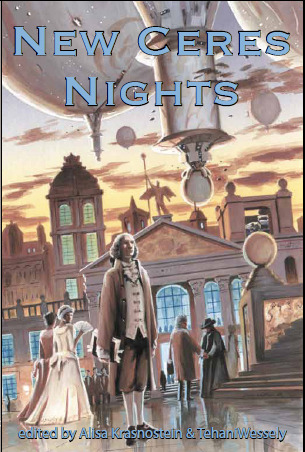
 

New Ceres Nights edited by Alisa Kranostein and Tehani Wessely – review

This review sort of forms part of my contribution to the Australian Women Writers 2013 Reading Challenge. All my proper 2013 AWWC reviews can be found here.

I don’t think I can officially claim this as an Australian Women Writer’s challenge book, as only 6 out of the 13 stories are penned by Australian women. However, it show the work of many of Australian speculative fiction’s current batch of award winning female authors (think Kaaron Warren, Angela Slatter, Thoraiya Dyer, Sue Isle, Tansy Rayner Roberts, Sylvia Kelso), so I’ll probably promote this through AWW channels.

And in my mind I’ll count it as a 1/2 contribution to my target.


New Ceres Nights

New Ceres Nights was published in 2009 by Twelfth Planet Press. The premise of the anthology is that the stories are all set in the shared world of New Ceres, a planet in the outer colonies that has embraced (and ruthlessly enforces) an 18th century way of life. Apart from a single spaceport connecting it to the rest of the human race, the technological level of the whole planet has been wound back.

I found the background to this anthology interesting. The introduction by New Ceres Board members Tansy Rayner Roberts and Dirk Flinthart, tells of a world built by an online community of mainly Australian speculative fiction writers, artists and fans. This was a bit before my time (as regular readers of this blog know I have only been involving myself in the Australian spec fic scene for the last year or two), but it seems like a fascinating experiment in using the internet to build community.

As far as I can tell, the New Ceres project is gone (all links seem to lead to dead-ends and defunct sites), so reading this anthology feels like a glimpse into a now departed phase of Australian speculative fiction history. A few other artefacts survive (such as the book Angel Rising by Dirk Flinthart) as well as some cryptic references to an eZine, but that is about it.

It’s too bad – I liked what I’ve read so far. It would have been fascinating to have a look at all the shared “source material” as well just to see how the world was constructed. It reminds me of a recent Kickstarter the Massive Fiction Project, which is aiming to build a shared world for fiction writing. I’m interested in these kinds of endeavours and constructs, would have been great to see an Australian attempt.

If any reader of this article was involved in the New Ceres shared world experience, I’d love to hear from you in the comments section below.

Anyway enough tangental musings, why don’t we return to the actual book. From the back blurb: “New Ceres Nights presents thirteen exciting stories of rebellion, debauchery, decadence, subterfuge and murder, set against the backdrop of powdered wigs, coffee houses, balls and duels”.

The mixture of 18th century limitations and illicit high technology made a surprisingly powerful combination, reminiscent of some of the better steampunk stories I’ve read. All the stories were quite good, I can’t really call out one I didn’t like. As is my habit, I’ll only comment on those stories where I have something to say – which is no reflection on the other stories of course!

  • The first story of the collection, Debutante by Dirk Flinthart, gives a very effective introduction to the world of New Ceres. Set somewhat before the rest of the anthology, it is an origins story of a sort. Flinthart’s dialogue is particularly sharp, and the ending to this tale gives you a real sense of the tone of the collection.
  • The contrast between the first story and the second (The Widow’s Seven Candles by Thoraiya Dyer) is quite stark, as the reader is thrown from a relatively hi-tech scenario to a very low tech one. Dyer’s writing is very engaging, and she creates a very sympathetic lead character in the candlemaker Etienne.
  • Murder in Laochan by Aliette de Bodard was notable in its use of a non-European 18th century backdrop. I also quite liked the conceit behind the main character, and found the story a delight to read.
  • Speaking of interesting conceits, Tontine Mary by Kaaron Warren (whose work I have been enjoying a lot of late) draws on an actual feature of 18th century life, the tontine. A tontine is essentially a lottery, where a group of people put in money and the last surviving member gets it all. Warren captures the life of the title character marvellously, so much so that her parting “gift” to her great grand-daughter is all the more affecting because of the sympathy you have developed over the course of the story.
  • Tansy Rayner Roberts‘ background as a comedic writer comes through in the somewhat arch Prosperine When It Sizzles. Sharp dialogue and great pacing made this a very enjoyable read.
  • Blessed Are The Dead The Rain Falls Upon by Martin Livings introduces an element of the detective noir genre into the world of New Ceres. I enjoyed the change of pace, and the point of view character was well realised.
  • The anthology is rounded out by The Piece of Ice in Miss Windermere’s Heart by Angela Slatter. This story, extremely well written, had one of my favourite characters of the book, the gentlewoman thief Ms Violet Windermere. While filled with humorous asides, Slatter does engender a connection with the character that left me wanting more.

The anthology also included the excellent:

All in all I found that I really enjoyed this anthology and have no hesitation in recommending it.

UPDATE 5/5/2013

The good people at Twelfth Planet Press tell me that the cryptically referenced eZines from the New Ceres shared world days are being published as eBooks. The first was released just a couple of days ago. Good timing on my part, no?

I also reviewed this book on Goodreads. View all my reviews.


Creative Commons License
This work by Mark Webb is licensed under a Creative Commons Attribution-ShareAlike 3.0 Australia License.


The Accidental Sorcerer by K. E. Mills – review

This review forms part of my contribution to the Australian Women Writers 2013 Reading Challenge. All my 2013 AWWC reviews can be found here.


 The Accidental Sorcerer

The Accidental Sorcerer by K. E. Mills has been on my to be read list for quite some time. The main reason I hadn’t read it was fairly simple – Amazon kept telling me it wasn’t available on Kindle. Later books in the Rogue Agent series were, just the first one wasn’t. I liked the blurb. I was intrigued by the concept. But the website kept telling me that the book couldn’t be purchased in my country.

What a bloody cheek I thought to myself. It’s an Australian author and everything. I hate the labyrinthian world of international publication rights.

Turns out I must have been doing something stupid. I eventually stumbled across the eBook version through some combination of searches and following links from other books. Now it shows up very easily when I search for the obscure phrase “The Accidental Sorcerer K E Mills”. <insert deity of choice here> knows what I was doing before.

Anyway, book firmly (but electronically) in hand, I started reading. The Accidental Sorcerer is based in an alternate Earth, somewhere in the equivalent of the late 19th/early 20th century. The main difference is that magic is very real and is being combined in interesting ways with the products of the industrial revolution. Our hero, Gerald Dunwoody, is a lowly ranked wizard on the edge of giving up his dreams of greatness. He has taken a public service job as a magical safety inspector and is sent on a surprise inspection of a magic staff manufacturing facility when things go horribly wrong. He manages to avert complete catastrophe (something that shouldn’t have been possible for such a low powered wizard) but still manages to get blamed for it all. Rather than stay in the England-equivalent country (Ottoland), he takes a job in the colonies in a small, unremarkable country (New Ottoland) as court wizard, hoping that the heat will eventually die down. Bad things ensue.

I enjoyed the alternate world aspect, especially examining how society might progress if magic was real and pervasive. The “mother country/colony” dynamic was explored, which has particular resonance for an Australian audience constantly battling with our own cultural cringe. It had that very British sensibility that I always enjoy.

I also liked the magic system. While not described in huge detail, there was that iceberg sense that Mills had worked this through under the surface so that the parts poking up into the air had a certain consistency.

I was a bit hit and miss with some of the dialogue. There was some excellent banter between characters, but also some that was trying a bit too hard to be witty. The voice of one of the minor characters (Reg the bird) didn’t quite strike the right chord for me, I could see what the character was meant to be, but it didn’t quite gel. Her mysterious history as a powerful political player in the past didn’t really match some of her more superficial comments as the plot progressed. However, other minor characters (such as Monk) were very nicely characterised.

The first half of the novel is quite light hearted. The second half moves into much darker and morally ambiguous territory. I really liked the contrast, and also how this transition established the scene for further novels. I think if the tone had stayed on the light end, I would have struggled to see how this could have been anything more than a one off novel. There was enough complexity by the end to justify an ongoing series.

I don’t want to spoil anything, but also can I say that the set up for future novels (the premise for Gerald’s future career) was great, and I especially appreciated how elements had been introduced through the book that came together nicely to support that direction. That’s a bit cryptic, but you should know what I mean once you’ve read the book.

I will be reading the other books in this series (at some undisclosed point in the future when I am more up to date with my current reading). In the mean time I commend The Accidental Sorcerer for your reading pleasure.

I also reviewed this book on Goodreads. View all my reviews.


Creative Commons License
This work by Mark Webb is licensed under a Creative Commons Attribution-ShareAlike 3.0 Australia License.
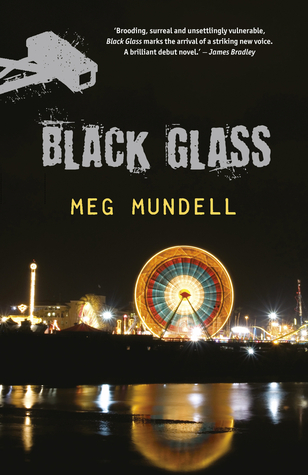
 

Black Glass by Meg Mundell – review

This review forms part of my contribution to the Australian Women Writers 2013 Reading Challenge. All my 2013 AWWC reviews can be found here.


Black Glass by Meg Mundell

Black Glass by Meg Mundell has been on my reading list for a while. When I was looking through my Kindle to find which book to read next, I picked it more because I’ve had it for a long time than because it leapt out at me.

And I loved it.

So why did it take so long for me to pick up the book? I try to avoid reading detailed reviews of books on my to-be-read list (for fear of spoilers) but I do often glance over high level descriptions to get a feel for whether I’m going to like a book. And I realised that I had internalised two main facts about Black Glass through this vague process of osmosis.

  1. The book was really good (like, award nomination good).
  2. It was a story of two teenage girls trying to find each other in a dystopian Melbourne.

From this (admittedly very small) evidence base, I had put together an image of a technically very good book, a “worthy” novel, that would make me a better person to read, but that I might not actually enjoy. And those kinds of books tend to stay on my to-be-read pile for a long time.

I shouldn’t have hesitated. The book is technically very good and does have interesting things to say, but it is also hugely entertaining.

So, in the interests of providing an alternative view of the book, let me describe it this way. If you like William Gibson (especially the Blue Ant series) and love speculative fiction set in an Australian context, you’re going to like Black Glass.

The structure of the novel seemingly chaotic on the surface, with a conventionally constructed main narrative thread told from the point of view of the two separated sisters (Tally and Grace) interwoven with minor threads told from the point of view of Milk (a man pioneering the art of influencing the mood of a group of people through light, sound and smell) and Damon (a freelance journalist in a world where you’re only as good as your last story). To top it off, small vignettes from a variety of minor or one-off characters, performed in unusual modes (e.g. one sided conversations, surveillance tapes, news snippets etc) illustrate aspects of this future dystopia. It comes together in a chaotic blend, exactly the kind of smart writing that rewards a small investment in adjusting to an unusual narrative style.

Mundell covers some big themes, including the unhealthy manipulation of the citizenry by the media, the dumbing down of journalism, increasing stratification of society into haves and have-nots, government control, familial relationships and survival on the streets when you have no resources to draw on. In some of the scenes that depicted the freelance journalist pitching stories to editors, I detected the scent of personal experience in the journalist’s frustration with people who want “grit” but not “substance” – I wouldn’t be surprised to learn that Mundell herself has some experience in the journalism space.

The main characters are all richly drawn, with distinctive voices (both in terms of dialog and general tone). Mundell invests a lot of energy in creating characters that are both mostly sympathetic (despite their flaws) and compelling. This depth pervades even the more minor character, some of the tragedy that surrounds the character of Blue, for instance, has a strong impact even though the worst of it happens off stage.

The style is reminiscent of Gibson’s work, obviously set in the future, but not the unrecognisable future. Interesting asides on technology, and the different styles of narrative, complete the affect.

This is a strongly character driven piece, sometimes at the expense of the plot. This does result in the pace sometimes dragging a little but this is a minor quibble.

All in all I found Black Glass a thoroughly engaging read. Highly recommended.

I also reviewed this book on Goodreads. View all my reviews.


Creative Commons License
This work by Mark Webb is licensed under a Creative Commons Attribution-ShareAlike 3.0 Australia License.


Bitter Seeds by Ian Tregillis – review

Ion Newcombe, the editor of the excellent Antipodean SF website, recently asked me to review Bitter Seeds by Ian Tregillis. Like the good human being that I am, I immediately did so.

The review is now up in issue 177. Hope you enjoy it!

Note: a copy of the book was provided to me by Antipodean SF. It was free.


Update: I also narrated the review for the latest Antipodean SF podcast (edition 177), it kicks in at about the 44m mark.

The Interrogation of Ashala Wolf by Ambelin Kwaymullina – review

This review forms part of my contribution to the Australian Women Writers 2013 Reading Challenge. All my 2013 AWWC reviews can be found here.


 The Interrogation of Ashala Wolf

 The Interrogation of Ashala Wolf is Ambelin Kwaymullina’s first novel. It is based in the far future after a devastating cataclysm has left the world reshaped into a single continent, and the remnants of humanity living in a small number of cities and adhering to a philosophy of Balance to prevent future catastrophes.

Some people are born with special abilities (e.g. the ability to run abnormally fast, turn their dreams into reality, start fires, cause earthquakes etc). These people have been deemed to be a threat to the Balance and are kept in detention camps.

Ashala Wolf is the leader of a tribe of young people with abilities that have escaped detention and live in the wilderness. The story opens with her captured and about to be interrogated for information to help the authorities capture her fellow rebels.

The Interrogation of Ashala Wolf is a young adult piece, so I don’t think I was exactly the target market. For the most part the heroes are young and the villains older, and the story plays out with a strong teenage sensibility.

For all that I wasn’t exactly the intended audience, I enjoyed this novel. The pacing was good, with a lot of action to counter-balance the teenage angst. The writing was clear and crisp and brought me along for the ride smoothly. I finished the book quickly.

I thought the novel had an interesting structure. Without giving spoilers, there is an event part way through the book which casts things in a new light and allowed for the more gradual introduction of information about the broader world in a way that was credible and avoided too much info dumping. There is a lot of use of flash back and memory to tell the story, but it is done in an interesting way.

I enjoyed the references to Australian Aboriginal culture. Because of the near civilisation-ending nature of the cataclysm, there aren’t the same kind of racial divides as there are in contemporary society. However, Kwaymullina makes it clear that Ashala is one of the last descendants of Aboriginal Australia and weaves in Aboriginal mythology into this far future tale. While I can’t comment on the authenticity of the representation, I found it interesting to consider the perspectives on connection to land and people that the book explores.

There are other themes that will resonate with an Australian audience, such as the granting of citizenship, the nature of detention and even the ability to carve out a place for humans in a harsh and unforgiving environment. Both the “normal” society and rebel society have a strong connecting theme of living in harmony with the enivornment, they just disagree what constitutes harmony. Respect for land and the environment pervades every aspect of the story.

While this is the first book in a series, the story is self contained and finishes without invoking a large cliff hanger.

An enjoyable story that I’d have no hesitation in recommending to a young adult audience.

I also reviewed this book on Goodreads. View all my reviews.


Creative Commons License
This work by Mark Webb is licensed under a Creative Commons Attribution-ShareAlike 3.0 Australia License.


Dark Space by Marianne de Pierres – review

Dark Space by Marianne de Pierres

This review forms part of my contribution to the Australian Women Writers 2013 Reading Challenge. All my 2013 AWWC reviews can be found here.


Dark Space is the first of the Sentients of Orion series by Marianne de Pierres. The storyline primarily follows three characters – Baronessa Mira Fedor, a member of the planet Araldis’ aristocracy and born with a genetic makeup that allows her to interact directly with living spaceships, Trinder Pellegrini the spoiled son of Araldis’ planetary ruler and Tekton, an influential citizen of the planet Lostol chosen as a candidate to interact with a recently discovered powerful entity some think is God.

These three point of view characters are interesting selections. All of them are from positions of great wealth and privilege. None of them is particularly sympathetic (although for entirely different reasons). I think the reader is meant to side with Mira, but I found it hard to warm to her.

With three unsympathetic main characters you’d think the story would be in trouble, but the way the storylines interact really works. You see glimpses of the potential for growth in Mira and Trinder, and Tekton is so self centred and devious I found myself cheering for him. So while the characters were not sympathetic, I found them compelling. Just as good in my books.

The world building behind the story was comprehensive and consistent. There is plenty of ground setting in this first book for the rest of the series to build on. The cultures of the various planets and societies referenced, the implications of “humanesque” vs alien sentients and the technology were all well thought through and supported the story.

Italian is not the first culture you expect to see represented in a space opera. This created an interesting point of difference from a lot of other books. The repressed role of women on Araldis provided the source of a lot of the conflict in the novel. It was interesting to think about how some cultural traits that we consider backwards could flourish if the cohort who supports them were to get their own planet.

The plot was enjoyable, with plenty of political intrigue and short bursts of action. Interesting questions were raised and story arcs begun. I’ll certainly be tracking down the rest of the books in the series to see how the story unfolds.

Recommended.

I also reviewed this book on Goodreads. View all my reviews.


Creative Commons License
This work by Mark Webb is licensed under a Creative Commons Attribution-ShareAlike 3.0 Australia License.
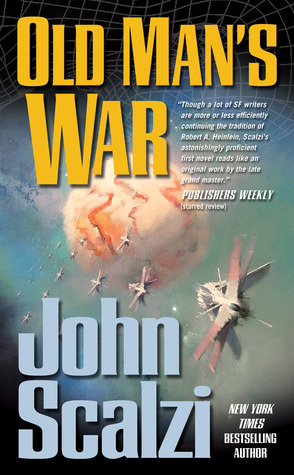
 

Old Man’s War by John Scalzi – review

Old Man's War by John Scalzi

Old Man’s War is the first in the Old Man’s War series of books by John Scalzi. I’ve heard the book mentioned in a lot of different venues and wanted to give it a go before trying some of Scalzi’s later work (including the recent Redshirts whose premise intrigued me).

Old Man’s War is military sci-fi. It is often compared to Robert Heinlein’s Starship Troopers and I can see why that is. Old Man’s War brings a modern sensibility to the same themes (humanity beset by aliens across the galaxy and maintaining a vast military machine just to keep our toehold in space).

Our protagonist, John Perry, has just turned 75. This is the age that citizens of the USA can sign up for the Colonial Defence Force (CDF) and go off planet to serve in humanity’s military. Earth is a separate entity than the Colonies and Earth citizens have virtually no visibility about what happens in the galaxy at large. The Colonies have vastly outstripped Earth in technological terms and earthlings sign up on the assumption that the CDF is going to make them young again to fight as a soldier. Survive for your military term (between 2 and 10 years service) and you get to start life again on a colony somewhere.

This was a good pulp read. The prose was clear and crisp, the ideas were cool and there was a lot of action using whiz bang technology.

I enjoyed the way the world was revealed. As an Earth citizen, John Perry doesn’t know anything more than unsubstantiated rumours about what happens in the Colonies. Seeing events unfold through his eyes allows the back story to be sprinkled across the first third of the book without feeling like you were being subjected to huge amounts of info dumping.

The characters were engaging, but not compelling. I liked the main character, but I must admit I found myself getting annoyed that things seem to keep working out neatly for him. His obstacles were all external, things beyond his control that happened to him. And he meets these challenges in the best possible way every time considering the circumstances. This of course is why he is the hero, but I think I would have found him more relatable if he’d had a flaw or two.

Minor characters are often cannon fodder. It is made very clear from the beginning that life expectancy is not very long as a CDF soldier and Scalzi doesn’t let you forget it. The carnage is comprehensive, and if a new character is introduced it is an even-money bet that their narrative purpose is to die horribly to demonstrate a new way in which the universe is a tough place to be.

Scalzi paints on a large canvas. The galaxy is filled with competitive aliens all vying for the relatively small number of habitable planets (although what consists of “habitable” changes from species to species).  I can see why Scalzi has set a few more books in this world, there is a lot of scope for different stories.

The plot touches on a lot of interesting philosophical points without digging into them in great detail. For instance, in response to a hostile universe, humanity has adopted a “shoot first and ask questions later” approach. This position is challenged briefly in one part of the story, but that thread doesn’t really go anywhere. There is enough to make you think briefly but it stops short of being really crunchy.

However I did find the storyline a good antidote for some of the saccharine stories out there that assume that if we can just understand the “Other” as represented by aliens we would all live in perfect harmony. I imagine that interacting with aliens wouldn’t be like interacting with other Earth based cultures, where there is at least a common genetic and behavioural starting point that comes from evolving together on the same planet. “Kill or be killed” seems just as likely an outcome as “galactic federation”, and I liked reading a book that acknowledges that possibility.

So, all in all an excellent pulp read. I’m likely to read the other books in the series including the recent Human Division which is being released as a weekly serial. I find this interesting as it represents a different way of using the internet and eBooks to engage with an audience. I’ll be watching to see how that goes.

Recommended.

I also reviewed this book on Goodreads. View all my reviews.


Creative Commons License
This work by Mark Webb is licensed under a Creative Commons Attribution-ShareAlike 3.0 Australia License.